What is Petty Cash in Accounting?

There will be days when unexpected business expenses occur, which can be urgent and you may have to handle them immediately. Without careful use, it is effortless to get out of control of the use of petty cash. Failure to track usage can waste money and have more severe consequences. It’s effective as quick money to handle small and unexpected expenses and saves plenty of time because it doesn’t require planning in advance or authorization. Review petty cash do’s and don’ts to ensure you correctly handle your fund.

  • Then, place the receipt in the lockbox and record the expense in the petty cash log by entering the date, payee, description, reference number, and amount.
  • You need to create an expense entry for each receipt that you’re recording from the lockbox.
  • However, we can also specify that certain expenses are always chargeable to petty cash, even if they’re above $50.
  • The petty cash balance on the log should also be regularly reconciled with the actual petty cash fund.
  • The details are recorded in General Ledger as credits to the petty cash account, while the same is kept as a debit detail to multiple other expense accounts.

Recording Petty Cash

what is petty cash in accounting

Begin by appointing a dependable petty cash custodian; they will petty cash oversee the fund, ensuring the integrity of petty cash disbursements. This individual is your point person for managing this asset, so trustworthiness is key. Next, secure the cash in a lockbox or cash register to protect it from theft or misuse. You can establish the fund through a check or ATM withdrawal, making sure the transaction is recorded clearly in your accounting ledger. This log, crucial in both general and imprest petty cash systems, will rely on vouchers which the custodian collects in exchange for disbursing funds, ensuring each penny is accounted for. Balancing the petty cash account usually occurs when the fund needs to be replenished.

Common types of petty cash expenses

Discover challenges, benefits, and best practices for managing tail spend. Opinions expressed on the pages of this website belong to the author and do not represent the views of companies whose products and services are being reviewed. After we click the green Save button, the first entry should appear like in the image below. The petty fund amount, therefore, is now back to the authorized amount worth $100. Free & editable profit & loss template for Aussie small businesses.

Understanding Accounts Receivable (Definition and Examples)

And when you maintain records of all your business’s expenses, you can claim tax deductions. The bottom portion of the petty cash log won’t be completed until the cash in the lockbox needs to be replenished. There’s no need to make journal entries when expenses are reimbursed from cash in the lockbox.

what is petty cash in accounting

An accountant will typically write a cheque to “Petty Cash” to fund the petty cash account and cash this cheque at the company’s bank. Typically, companies that set up a fund (or funds, if the company is large, with many departments) also appoint someone to handle and monitor it. Restricting access to the fund lowers the chance of theft or misuse.

  • Keeping careful records of cash expenditures will be a huge help when it comes time to reconcile your petty cash account.
  • Petty cash has it’s own asset account and is reconciled at the end of every period.
  • Petty cash transactions are typically recorded in the debit column of the petty cash account to reflect cash outflows.
  • It might be tempting to wing it for as long as you can, but setting up a proper petty cash system early is crucial.
  • By centralizing policy but allowing for local handling, you can manage petty cash effectively, even across a sprawling organization.
  • At that point, the petty cash custodian must request more money from the general cash account to replenish the petty cash fund.

If you plan to use petty cash for small business purchases like postage and office supplies, it may be handy to use the petty cash log to keep track of your transactions. Keeping careful records of cash expenditures will be a huge help when it comes time to reconcile your petty cash account. However, using accounting software, like QuickBooks Online, can make managing petty cash expenses easier and faster because it simplifies the recording of expenses. When a petty cash fund is in use, petty cash transactions are still recorded on financial statements.

What is the difference between petty cash and cash on hand?

  • Businesses use over-accounts or under-accounts to enforce the fund’s balance during adjustments.
  • Petty cash also allows businesses to keep track of small expenses more easily.
  • These are typically minor, everyday costs that don’t warrant more formal payment methods.
  • If new funds are needed, the cashier writes a new check to fund the petty cash drawer and takes, in exchange, the receipts from the purchases that depleted the cash.
  • This is the only amount of cash that is not immediately deposited in the bank account after it is received.
  • This increases the expenses, and provides the check to replenish the account.

A petty cash fund will undergo periodic reconciliations, with transactions also recorded on the financial statements. In addition to daily incidentals, it is also commonly utilized for office supplies, postage, and minor employee reimbursements. It’s a tailor-fit solution for swift and discreet disbursements, like petty cash payments to Human Research subjects, which demand confidentiality and expedience. Replenishing petty cash is usually scheduled at the end of an accounting period. Accountants typically log this into the general ledger both as credits to the petty cash account and debits to expense accounts.

  • Petty cash is a small amount of money kept on hand for small purchases or expenses.
  • Petty cash is the amount of cash used by a company to pay a small amount of money from time to time.
  • Selecting the right custodian for your petty cash fund is a critical decision that you’ll want to make with care.
  • Petty cash is typically managed by a petty cash custodian, who manages the petty cash fund and keeps track of all expenses.
  • She counts the remaining cash, matches it with the receipts and records, and prepares a report to submit to the finance department.
  • Making a single person responsible for petty cash cuts down on confusion and minimizes the risk of theft.
  • If you use accrual accounting, the top-up may be credited from accounts payable instead of cash.

When the petty cash balance runs low, the receipts are reviewed and more cash is withdrawn from the bank to restore the fund to its original amount. By the end of the week, Ananya takes the time to reconcile the petty cash fund. She counts the remaining cash, matches it with the receipts and records, and prepares a report to submit to the finance department. The petty cash is then replenished to its original amount, ready to handle next week’s unforeseen expenses. The journal entry to fund petty cash would debit the account and credit to cash bank account.

Petty Cash vs. Cash on Hand

Accounting records replenishing the petty cash fund as a debit to the petty cash and credit to the cash account. A petty cashier manages the petty cash fund, disburses cash for minor expenses, collects vouchers and receipts, and maintains accurate transaction records for reconciliations and audits. When managing petty cash disbursements in any organization, it’s essential to adhere to procedures that maintain clarity and consistency. For every disbursement, ensure completion of a voucher or receipt detailing the amount, the date, and the specific purpose of the expense. To facilitate transparent reimbursement, attach the corresponding proof of purchase to the voucher post-expenditure.

Understanding Tax Forms W-9, 1099-NEC, 1099-MISC, and 1099-K: Navigating Income Reporting and Tax Compliance

what are 1099s

We’ll search over 500 deductions and credits so you don’t miss a thing. For 2024, the threshold amount is expected to be $5,000 with no regard to the number of transactions. For tax year 2023 and earlier, this form is issued when annual third-party network processing activity exceeds $20,000 and 200 individual transactions. It doesn’t matter whether or not the transaction is taxable.

what are 1099s

Tax tools

If you have a brokerage account that holds stocks or mutual funds, and these investments paid out dividends, that counts as income. This dividend income does not apply to dividends accrued in tax-sheltered retirement accounts, such as a 401(k) or IRA. Form 1099-B documents income from the sale of securities at a brokerage or barter exchange. If you sold stock last year, the gain or loss will be reported on a 1099-B.

what are 1099s

Warning—DeepSeek Is A Chinese Security Nightmare Come True

It’s also relevant for investors and anyone receiving non-employment income. Form 1099-NEC is another common type of 1099 and is used to report a certain level of income paid outside of W-2 wages. Sole proprietors and companies of all sizes will often use contractors or freelancers for a range of different jobs, such as bookkeeping, consulting, or handiwork. In this case, those businesses would issue a 1099-NEC to anyone they paid more than $600 for a service.

what are 1099s

What is the 1099 Form?

This letter might not arrive promptly so it’s important to remember that you’re responsible for paying the taxes you owe even if you don’t receive the form. Taxpayers can expect a few changes this tax season, with lower reporting thresholds and a new way to file for free. Here are key dates to know, how to file taxes for free and what to know about the 1099-K form. W-2 employees pay less in employment taxes and may receive greater access to employer benefit plans, such as retirement accounts.

Who Should Receive a 1099 Form?

what are 1099s

A good practice is to keep an updated W-9 on file so that all 1099s have your current address and tax ID. Similarly, always ask for a W-9 upon hiring a contractor to confirm the need for a 1099 and have the correct information on file. If you pay them over $600 for services with cash, check, ACH, Zelle, or Venmo you will need to issue them a 1099. First thing you need to know is that you only need to issue 1099s if you’re a business owner or engage in some type of trade or business (like being a landlord).

What Is an IRS 1099 Form?

Based on the broad range of situations requiring forms, it’s quite possible you’ll need to file a 1099 at some point. Rather than a single form, the Form 1099 refers to a group of IRS forms issued for income. Anyone who transfers life insurance to someone else must file Form 1099-SB to report the sale of the said life insurance policy. If you file by paper, the IRS must get them by February 28 and March 31 for e-filing with tax software. If the date falls on a weekend, the due date is the next business day. We recommend checking the latest IRS instructions for specific due dates.

  • Businesses are required to send a copy of Form 1099-MISC to the recipient and another copy to the IRS.
  • All 1099 forms are IRS documents and can be obtained and filed through the agency.
  • You must report on your tax return income shown on any 1099-MISC that you receive.
  • 1099-R tax statements are available now for IMRF Retirees inside Member Access.
  • Besides a regular paycheck or what is reported on a W-2 form, there are many ways to earn income throughout the year.
  • If you aren’t an employee on a business’ payroll but receive compensation from a business for services, you will receive a 1099-NEC.
  • For example, rents, prizes, awards, and other nonemployee compensation fall under this category.
  • The 1099-NEC will include the name, address and tax identification number of the business or client who paid you and your name, address and Social Security number.
  • Form 1099-A reports the acquisition or abandonment of secured property (foreclosure).
  • The employee never receives that money unless they get some back in the form of a tax return.
  • Consult a tax professional if you’re unsure whether you should pay taxes on a distribution.

These fines range from $50 to $270 per form, depending on the delay. This deadline applies to furnishing the form to the recipient. It’s also typically the deadline for submission to Accounting For Architects the IRS. It is important to meet the deadline for 1099 Forms to avoid fines.

  • This letter might not arrive promptly so it’s important to remember that you’re responsible for paying the taxes you owe even if you don’t receive the form.
  • A Form 1099 is issued to report non-employment income to the Internal Revenue Service (IRS).
  • The payer fills out the 1099 and sends copies to you and the IRS.
  • The 1099-Q reports money that you, your child, or your child’s school receives from a 529 plan.
  • Brokers must submit a 1099-B to each individual to report gains or losses from transactions.
  • Knowing how to fill out a 1099 form keeps this income accurately reported to the Internal Revenue Service.

Report Errors Immediately

You can use the IRS e-file system or opt for IRS-approved third-party e-filing services. The Taxpayer Identification Number (TIN) is essentially the ID the IRS uses to track the vendor, business, individual or entity’s tax records. If the TIN you have on file is mismatched or missing, you risk submitting an incorrect 1099, which could result in IRS B or P notice penalties. Keep in mind – if you paid via credit card, debit card, or a third-party payment system (like PayPal), those payments may have already been reported to you via Form 1099-K by the payment processor. Knowing when and how to fill out a 1099 form is critical in order to ensure that you are complying with IRS regulations. It’s important to differentiate between employees and independent contractors.

Best in Class Tokenized Payments

payment token service provider

That said, they’re also frustrating because they result in lost revenue, irritated customers, and – potentially – bad reviews, too. This means that even if a hacker does manage to breach a system, they’d only gain access to tokens (which, remember, are simply strings of numbers with limited usability), rather than any card details they could actually use. Since tokenized data is not considered sensitive, businesses can simplify their compliance efforts with the PCI Data Security Standard ,saving time and money.

payment token service provider

Credit Union

Fill out our contact form and one of our representatives will be in touch to discuss how we can assist you. Mobile device fragmentation, the myriad security options, and the increasing number of players represent significant challenges, and harnessing them into a single effective multi-channel digital payment strategy may seem daunting. EMV Payment Tokens have the ability to co-exist with other forms of tokenisation, support all use cases and are applicable in any environment which currently uses a PAN. The flexibility of the Technical Framework means EMV Payment Tokens can be implemented to meet global or different regional requirements.

  • These are stored within a secure element or trusted execution environment (TEE) on the cardholder’s device (such as a smartphone or smartwatch).
  • EMVCo also manages registration programmes to ensure global interoperability and support transparency.
  • But, network tokens, which are issued directly by the major card networks like Visa and Mastercard, are quickly becoming the norm.
  • If you’ve ever been to a casino or an arcade, you’re already familiar with the concept of payments tokenization.
  • Tokenization replaces sensitive data with unique tokens that have no intrinsic value, while encryption transforms data into an unreadable format that can be reversed with a decryption key.

Venmo for business guide: Use cases and strategy advice

  • For one-off online payments, payment tokens in the form of a virtual card displayed on the bank’s mobile app can be retrieved and used by the cardholder to secure guest checkout, i.e., without creating an account with this specific merchant.
  • This token, created for a fee and essentially a unique string of numbers is issued in real-time, and acts as a secure identifier of, or surrogate for, the PAN.
  • Now that you know how tokenization works, let’s dive into the role of payment tokenization service providers.
  • Through VTS, Visa is leading the token transformation by contributing to and implementing industry standards worldwide.
  • The solution also has a built-in Expense Management tool and many integrations that can connect to your existing tools, such as accounting software.

For example, a merchant token can be linked to multiple acquirer and issuer tokens, which enables the merchant to support multiple acquirers. Tokens are unique, randomly generated strings of characters or symbols used to represent sensitive data, such as primary account numbers (PANs). Since tokens are nonconvertible — that is, they can’t be reverse-engineered to reveal a customer’s original PAN — they’re an effective tool to protect sensitive data during storage, transmission and retrieval. Now you can mobilize Thales security solutions and experienced service teams to support your project– so you can deliver the best mobile payment experience for your customers. Consumers expect personalized, frictionless payment experiences and, as digital commerce grows, meeting these needs now and in the psp provider future should be a top priority.

  • Despite being one of the biggest rising forces in payments, tokenization is still an unknown entity to many people outside of the industry.
  • The token acts as a proxy for the cardholder’s primary account number (PAN), representing their payment data for authentication purposes without actually containing it.
  • For cardholders, the payment process is not impacted, and existing behaviour does not need to change.
  • One additional benefit of network tokens is that they attach to the cardholder account for the life of the card.
  • In each instance, these tokens only hold value at a specific establishment, meaning you could not walk down the street to a different casino or arcade and use these tokens.
  • Tokenization helps merchants maintain compliance with industry regulations such as PCI DSS by reducing the scope of systems that store cardholder data.

Token vault management

payment token service provider

They also authorize and settle transactions, ensuring security, compliance, and fraud prevention. Because of the added security, network tokens trigger fewer false declines in anti-fraud systems, improving the end cardholder’s experience and maximizing the merchant’s revenue. Combined, those benefits make network tokenization highly valuable to merchants and their payment providers. Tokenization goes beyond standard encryption like secure socket layer (SSL) and transport layer security (TSL). Instead, it replaces a cardholder’s payment data with a completely separate, unique token. The token acts as a proxy for the cardholder’s primary account number (PAN), representing their payment data for authentication purposes without actually containing it.

Payment methods guide: Navigating options for US businesses

payment token service provider

To learn more about omni-tokens, download our assets = liabilities + equity info sheet or schedule a consultation with a member of the ACI Worldwide team today. All industry participants can review and provide comments on new EMV Specifications and major updates before final publication. This guide brings the Technical Framework to life using real-world examples that the payment community is familiar with. A Guide to Use Cases is supplement to the Technical Framework which details industry input and guidance on new ways in which EMV Payment Tokens can be used. EMVCo manages two registration programmes to ensure traceability and support EMV Payment Tokenisation transparency.

payment token service provider

Tools and resources

payment token service provider

When a transaction can’t be network tokenized, the system will automatically default to the payment card data, which ensures the transaction is still protected and sensitive information is still walled off from bad actors. Likewise, for transactions where network tokens don’t apply, NMI’s other services can pick up the slack with things like automatic card updating and fraud reduction, ensuring merchants always have access to secure, smooth payment processing. It is crucial for international, domestic and private payment networks to use tokenization if they want the cards issued on their networks to be present and used in the digital world. Payment tokenization enables them to support the different digital payment scenarios for proximity, in-app, peer-to-peer (P2P) and remote payments and then offer cardholders more ways to pay, ensuring the card has a top-of-the-wallet position. For one-off online payments, payment tokens in the form of a virtual card displayed on the bank’s mobile app can be retrieved and used by the cardholder to secure guest checkout, i.e., without creating an account with this specific merchant.

This quick guide delves into payment tokenization, an important component of preventing payment fraud and crafting an exceptional customer experience. We’ll explore the relevance and benefits of tokenization for various business models, such as online retailers, subscription-based services, platform businesses, and brick-and-mortar retailers. Here’s what businesses need to know about the fundamentals of tokenization, and the unique benefits it holds for different types of businesses. Tokenization works for online card on file payments in a similar way to mobile devices.

  • This makes it easy for customers to pay for things with methods they’re familiar with.
  • Additionally, it’s important to note that these tokens are typically confined to the ecommerce channel.
  • For more information about how tokenization operates within Stripe’s suite of payment solutions, read more here.
  • Testing EMV Payment Tokens would be complex as they are not contained within one area of the payment ecosystem, but instead overlay the entire payment infrastructure.
  • So, even when a card rolls over to a new expiry date and security code, the network token doesn’t change.
  • EMVCo manages two registration programmes to ensure traceability and support EMV Payment Tokenisation transparency.

By tokenizing sensitive card information in digital wallets, customers can pay with saved card details – without having actually to carry their cards https://www.bookstime.com/articles/accounting-and-bookkeeping-for-small-business on them everywhere they go. Payment tokenization is, for example, particularly useful for businesses that rely on recurring payments (such as subscriptions) and ecommerce sites looking to reduce friction at the checkout. We’ll explore that in more detail below, though – in the meantime, let’s take a closer look at the different types of payment tokenization. Stripe is a powerful and versatile PSP that offers a wide range of features and services to help businesses process payments, manage subscriptions, and handle various financial transactions. Stripe also operates point-of-sale (POS) systems that streamline in-person transactions3.

What Is Cash Flow?

cash flow

Think of cash flow as a picture of your business checking account over time. If more money is coming in than is going out, you are in a “positive cash flow” situation and you have enough to pay your bills. If more cash is going out than is coming in, you are in danger of being overdrawn, and you will need to find money to cover what is cash flow your overdrafts.

cash flow

What is the difference between direct and indirect cash flow statements?

It has a net outflow of cash, which amounts to $7,648 from its financing activities. In contrast, cash flow per share focuses on liquidity, showing the cash a company generates. This makes it valuable for evaluating a company’s ability to fund operations, pay dividends, and pursue growth without relying on external financing. During economic downturns, strong cash flow per share can reassure investors and creditors, showcasing a company’s resilience and operational efficiency. Dealing with cash flow issues is most difficult when you are starting a new business.

Classification of Cash Flows

cash flow

The less you need to take from your business for personal costs, the more you can devote to your business during the crucial startup time. Most investors closely analyze free cash flow, as it reflects a company’s ability to generate cash internally and shows how wisely that cash is reinvested or used for shareholder returns. This makes free cash flow an essential indicator of a company’s long-term health and growth potential.

June Transactions and Financial Statements

cash flow

Again, the (800) indicates the negative effect on the company’s cash caused by the retained earnings balance sheet company not yet collecting the cash from its credit sales, reported on its income statement. Start by identifying the operating cash flow (OCF) from the company’s financial statements. This figure, found in the cash flow statement, represents the cash generated by the company’s core operations. OCF excludes cash flows from investing and financing activities, focusing solely on primary business activities. According to Generally Accepted Accounting Principles (GAAP) and International Financial Reporting Standards (IFRS), OCF can be calculated using either the direct or indirect method. The indirect method, more commonly used, starts with net income and adjusts for non-cash expenses, changes in working capital, and other non-operating gains or losses.

Create a Free Account and Ask Any Financial Question

When you get a credit line, you have a certain amount of credit in an account that you can draw on when you are short of cash and pay back when you have extra cash. For example, if you have a $25,000 line of credit, and you have taken out $10,000, you would pay interest only on the $10,000. If you were to take out a loan instead, you’d have to repay the entire amount (with interest), even if you didn’t need all of it. You may find it necessary to discount prices in the short term in order to move a lot of inventory, generate cash, and get back to a better level. It’s also called “running out of money,” and it will shut you down faster than anything else. Cash businesses are more at risk of being ​audited by the Internal Revenue Service (IRS) because it’s easy to hide cash income and not report it.

Calculation of Financing Cash Flow

Lastly, at the bottom of all financial statements is a sentence that informs the reader to read the notes to the financial statements. The reason is that not all business transactions can be adequately expressed as amounts on the face of bookkeeping and payroll services the financial statements. Cash flow statements and other financial statements are generally included in a company’s quarterly and annual reports to shareholders. Remember the four rules for converting information from an income statement to a cash flow statement? This section covers revenue earned or assets spent on Financing Activities. When you pay off part of your loan or line of credit, money leaves your bank accounts.

Example of Cash Flow

  • The analysis goes beyond accounting profits, which can be influenced by non-cash items, such as depreciation expenses or goodwill write-offs.
  • Not having to pay $700 of the cost of goods sold was good/positive for the company’s cash balance.
  • In today’s complex and ever-changing financial landscape, it is more important than ever to have expert guidance in managing your business’s financial health.
  • It’s a key indicator of financial health, helping businesses plan growth, dividends, and debt payments.

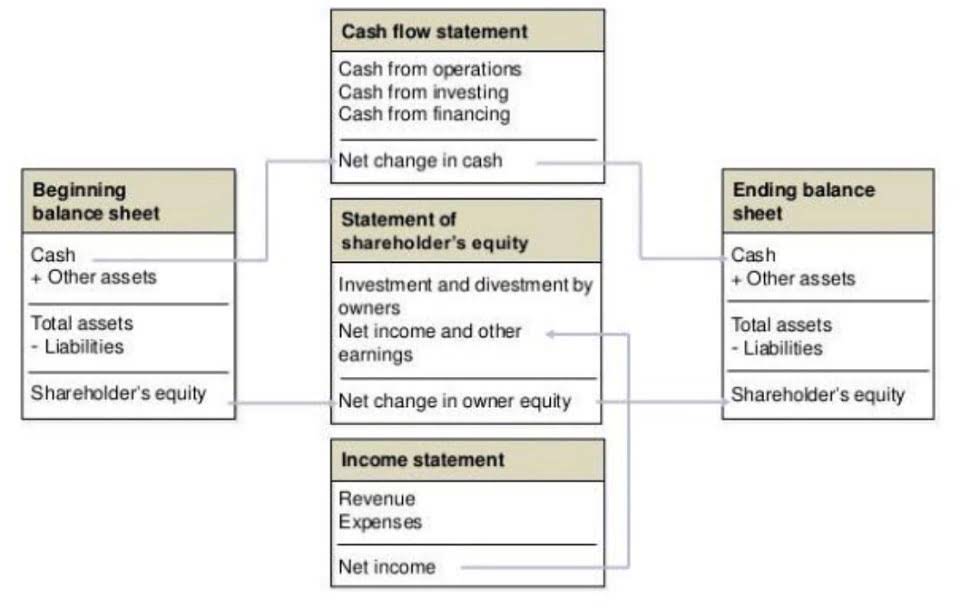
Customer purchases of mugs would provide cash coming in to the business, while payroll would represent cash going out. Cash might also flow in as the result of any investments owned by the company, or cash might flow outward in the form of loan payments, taxes, or overhead costs. A cash flow statement would document the movement of these different types of cash. A basic way to calculate cash flow is to sum up figures for current assets and subtract from that total current liabilities. Once you have a cash flow figure, you can use it to calculate various ratios (e.g., operating cash flow/net sales) for a more in-depth cash flow analysis.

Limitations of Cash Flow Analysis

A cash flow statement tells you how much cash is entering and leaving your business in a given period. Along with balance sheets and income statements, it’s one of the three most important financial statements for managing your small business accounting and making sure you have enough cash to keep operating. Cash flow analysis is an important aspect of a company’s financial management because it reveals the cash it has available to pay bills and invest in its business.